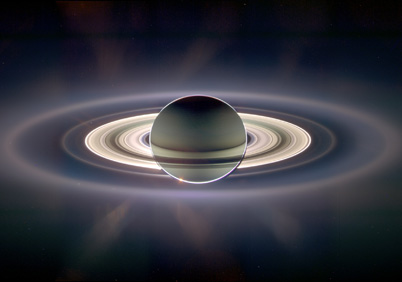
During Lent term 2026, I will be giving 16 lectures
on the dynamics of astrophysical discs, as part of Part III of the
Cambridge Mathematical Tripos.
Lectures will be at 11am on Tuesdays and Thursday in MR14.
There will be three examples classes and a revision class
in Easter term.
On this webpage I will post the course schedule, pictures, movies, and
other material that appear in
the lectures, as well as suggestions for additional reading, original
references, example sheets, etc.
Introductory references and general review articles
- Ogilvie, lecture notes and slides on accretion disk dynamics (here.)
- Latter, Ogilvie & Rein (2018), review chapter covering rings and disks (pdf.)
- Frank, King & Raine (2002). Accretion Power in Astrophysics, 3rd edn, CUP. (Textbook on classical disk theory.)
- Pringle (1981), ARA&A, 19, 137. (ADS link.) (Succinct review article on viscous disks.)
- Balbus (2003), ARA&A, 41, 555. (ADS link.) (Clear and concise account of instabilities and waves in disks.)
- Esposito (2010), AREPS, 38, 383. (ADS link.) (Gentle recent review of Saturn's rings.)
- Goldreich & Tremaine (1982), ARA&A, 20, 249. (ADS link.) (Detailed account of the physics of planetary rings.)
- Hellier (2001), Cataclysmic Variable Stars: how and why they vary, Springer-Verlag. (Very readable book on CVs.)
- Armitage (2011), ARA&A, 49, 195. (ADS link.) (Good reference on the dynamics of protoplanetary disks.)
- Ferrarese and Ford (2005), SSRv, 116, 523. (link.) (Well written and thorough account of AGN. The first 20 pages are worth reading for an overview on the subject.)
Schedule:
Lecture 1: Introduction
- Survey of astrophysical disk systems
- Basic physical and observational properties
- Equations of motion, circular orbits
- Characteristic frequencies
- Perturbed orbits: epicyclic oscillations
- Precession
A very basic but engaging account of Keplerian orbits can be found in Chapter 4 of David Tong's lecture notes on dynamics (link).
Those wanting more detail can consult Mark Wyatt's notes from his Part III courses, which are posted near the bottom of his homepage (link).
Finally, the classic text on orbital dynamics is `Solar System Dynamics' by Murray and Dermott (link). However, it is fairly hardcore.
- Elementary mechanics of accretion
- Equations of astrophysical fluid dynamics
The mechanical description of accretion using two orbitting particles is lifted from Section 1.2 in Lynden-Bell and Pringle (1974) (ADS link).
Further details on the equations of astrophysical fluid dynamics can be found in this document, written by Gordon Ogilvie. This should serve as a useful reference. For a derivation of the equations you could read chapters 2-4 of Cathie Clarke's book `Principles of astrophysical fluid dynamics' (link).
- Viscosity as proxy for turbulent flow
- Derivation of the diffusion equation
Those interested in learning more about turbulence could read `A first course in turbulence' by Tennekes and Lumley (first two chapters are relevant to today's lecture) and 'Turbulence' by Peter Davidson (chapter 1 and maybe 5).
For another derivation of the diffusion equation, see the notes by Ogilvie (here, lecture 3, and here, lecture 4). Finally, to calculate the components of the stress tensor in cylindrical polar coordinates you might find it useful to consult the resources on tensor calculus in curvilinear coordinates located here and here.
- Boundary conditions
- Steady accretion disks
- Spectrum of steady discs
For another take, and further details, on boundary conditions and steady accreting disks please consult lectures 3 and 4 in this old incarnation of the course, and in lecture 5 in this more recent version.
- Complications and observed SEDs
- Time-dependent solutions
- Algebraic similarity solutions
The cartoon I used for the SEDs of PP disks comes from Andrea Isella's thesis, which I can't find online anymore. It does appear on this page which also has some nice introductory material. The X-ray binary SED I stole from an old proceedings by Gierlinski and Zdiarski. The paper is here. The schematic representation of AGN spectra I got from an article by Koratkar which you can find at this location.
Sijme-Jan Paardekooper has some background notes on Greens functions which might be useful. (link.) More involved notes on Greens functions can be found in the IB Methods course. Section 10.1 in Josza's notes may be helpful. (link.)
The derivation of the Greens function in the case that the mean viscosity is a constant can be found in the classic paper by Lynden-Bell and Pringle (1974) in Section 2.2. (ADS link.) However, I would consult the far more accessible derivation in Ogilvie's notes. ( link.)
- Vertical hydrostatic equilibrium
- Important length and time scales
- Isothermal and polytropic disk models
This image taken by Cassini emphasises how thin Saturn's rings are, which in principle helps us constrain the kinetic temperature of the ring matter. In fact, the actual thickness of 1 km that is observed is due to large-scale corrugations and bending waves, rather than the vertical pressure gradient.
- Radiative disk models and opacity laws
- Approximate algebraic solution for an alpha disk
Most of this material is in the book by Frank et al. (2002), `Accretion power in astrophysics'. If you can't get your hands on the book you could have a look at the Section III.B in the review article by Balbus and Hawley (1998) (ADS link), which discusses the alpha-disk model in detail and works through an approximate solution for an alpha disk with Kramers opacity.
- Thermal instability, bistability, and outbursts in dwarf novae
Again, `Accretion power in astrophysics' is a decent reference for thermal instability in CVs. A more involved (and opinionated) review article is by Lasota (ADS link). There is no single `discovery paper' that first outlined the CV limit cycle, the closest might be Faulkner et al. (1983) (ADS link). Rather, the main ideas were developed collectively by researchers in the late 70s and early 80s.
- The shearing sheet
- Orbital motion in the shearing sheet
- Symmetries and boundary conditions of the shearing sheet
- Incompressible disk dynamics and equations
The shearing sheet model was first developed by Goldreich and Lynden-Bell in the 60s (ADS link), in order to study galactic disks. A good discussion of how the shearing sheet/box is implemented numerically is in Hawley et al. (1995) (ADS link). It includes a discussion of shearing periodic boundary conditions. The formal derivation of the equations of incompressible fluid dynamics in the shearing sheet can be found in this paper.
- Inertial shearing waves
- Centrifugal instability and Rayleigh's criterion
- Introduction to vortices
Two movies of shearing inertial waves in the shearing sheet can be viewed here and here. The left panel in these movies shows the amplitude of the waves as they shear through kx=0. The right panel shows the wavecrests shearing out to a trailing configuration. Note the transient growth in the second movie.-
I showed that accretion disks are linearly hydrodynamically stable, because their squared epicyclic frequency is positive. Researchers have argued, however, that there may be a `subcritical' transition to turbulence if the disk is perturbed sufficiently strongly. The argument is that the transient growth in a shearing wave might yield large enough amplitudes to set off this process. Two papers that discuss this can be found here and here. There are a number of others. However, numerical simulations and careful laboratory experiments have yet to see this bypass mechanism. See also the discussion in Balbus and Hawley (2006). (link.)
- Kida vortex solution and its stability
- Compressible disk dynamics and equations
- Density waves
ALMA observations of PP disk asymmetries can be found in this Nature paper by Casassus et al. (2013). (link.) They may or may not correspond to embedded vortices.
The elliptical vortices we looked at were first calculated by Kida (1981) (link). He took the rotating elliptical vortex solution discovered by Kirchoff in the late 19th century and then added a background shear flow. In the second example sheet we will go through the derivation. A short document outlining the derivation of the Kirchhoff solution can be downloaded here.
A movie showing the evolution of an unstable cyclonic vortex can be viewed here. This paper explores 3D instabilities that can attack a Kida vortex.
A youtube movie of the subcritical baroclinic instability simulated by Wlad Lyra can be viewed here.
- Axisymmetric gravitational instability
- Non-axisymmetric instability and `gravitoturbulence'
- Test particle orbits in the presence of an embedded satellite
Beautiful Cassini images of density waves in Saturn's rings can be found here and here. These are forced waves, and are generated by the gravity of distant moons.
There are no end of images showing galactic spiral density waves; here is a particularly nice one from Hubble. There are also observations of protoplanetary disks exhibiting spiral density waves. In the galactic case, the waves are probably amplified by the self-gravity of the disk, while in the protoplanetary case the waves are possibly generated by embedded planets.

A movie of gravitoturbulence in the shearing sheet can be viewed here. A movie of gravitoturbulence and fragmentation in a global disk is here. Note in the latter that once `planets' condense in the disk they very rapidly migrate inward and fall onto the star.
It is thought that brightness asymmetries in Saturn's rings are caused by gravitoturbulence with a characteristic lengthscale of 50 m. N-body simulations performed by Heikki Salo in Oulu have verified this idea and can be viewed here and here. The second simulation also shows the formation of long-lived aggregates/moonlets, which may occur at the outer edge of the A-ring and in the F-ring.
- Excitation of epicyclic oscillations
- Angular momentum transfer between embedded satellites and their disks
- Gap opening
For an alternative derivation of the amplitude of the forced epicyclic oscillations see pages 48-55 of Gordon's slides.
A more involved treatment can be found in Section IV of Armitage's lecture notes and in Section 4 of the review by Papaloizou and Terquem.
A movie showing the trajectory of test particles encountering a perturbing moon at the origin of the shearing sheet may be viewed here.
This image shows the moonlet Daphnis, embedded in Saturn's rings, exciting epicyclic oscillations in the ring material on the edges of its gap.
- Planet migration
- Equations of MHD
- Derivation of the axisymmetric MRI dispersion relation
The gap opening criterion derived in the lecture leans heavily on the argument in Papaloizou's and Terquem's review.
Movies of Type I migration can be found here and here courtesy of Richard Nelson.
A movie of gap opening, created by Phil Armitage, can be viewed here.
Information about embedded moonlets in Saturn's rings (`propellers') can be found here. And Hanno Rein's N-body simulations of the migration of such embedded moonlets can be watched here.
Finally, wonderful examples of gap opening can be observed in the Solar System due to the little moons Pan and Daphnis. Search for "Daphnis" on this page to get your fill of Cassini images of Daphnis.
While the MRI was first discovered by Velikhov and Chandrasekhar in the 50s, it was Balbus and Hawley in their 1991 paper that fully recognised its astrophysical importance. A nice introduction by Balbus can be found on scholarpedia.
Initially there was some resistance to the original local MRI analysis (see this paper, for example), but it was completeley validated by ensuing work in global and semi-global geometries, for example in cylindrical disks and in vertically stratified shearing boxes.
- Analysis of the dispersion relation
- Importance of disk thickness, magnetic diffusion, and magnetic field strength on the stability criterion
- Physical interpretation of dispersion relation
See Lectures 14 and 15 in Ogilvie's lecture notes, for an alternative treatment of the analysis. Notice that he includes viscosity, something we omitted for simplicity.
A treatment of how some of these ideas play out in a vertically structured disk can be found in Section 2 of this paper.
Generally, however, a disk must be highly magnetised for the MRI to switch off; the plasma beta has to be of order or less than 1, meaning magnetic energy and thermal energy are comparable. The MRI is more vulnerable, in astrophysical settings, to magnetic diffusion.
A local shearing box simulation of the MRI can be viewed here, courtesy of Tobias Heinemann. A vertically stratified box simulation conducted by Jake Simon can be found here.
One can also check out global simulations by Yanfei Jiang here and Zhaohuan Zhu here.